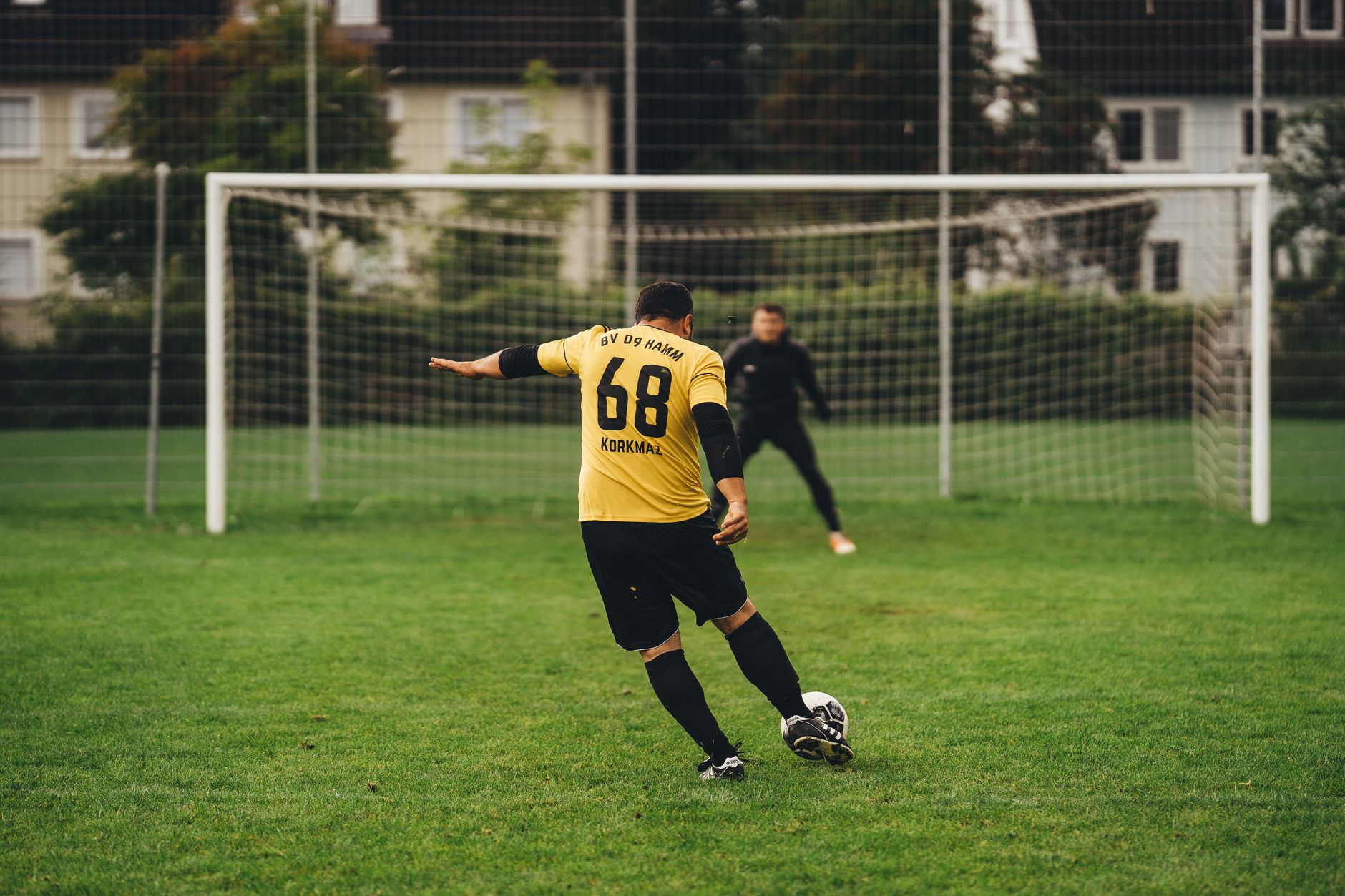
The semi-automated offside technology was meant to make the high defensive line safer. More precise calls, faster flags, fewer goals wrongly allowed - the argument was that coaches could push their back fours even higher without the same risk of getting caught out by a sprint in behind. That argument is looking shakier by the week.
Across European football this season, high-line defences are being punished in ways that have nothing to do with offside decisions. The issue isn’t the technology. It’s the assumption built into the system itself - that a high line is only vulnerable to the through ball. Teams are increasingly bypassing that entirely.
The Real Exploit Isn’t the Ball Over the Top
What’s working against high lines right now is the combination of a dropping second striker and a wide forward running beyond. The centre-backs are drawn toward the dropping player - a natural read - and the winger times the run to catch the line mid-adjustment rather than at rest. It doesn’t require exceptional pace. It requires coordination and a midfielder willing to play the ball early, before the shape has time to recover.
Bayer Leverkusen were exposed to this pattern multiple times last season despite their generally excellent defensive structure. Atletico Madrid, who defend deep by instinct, have been one of the few sides consistently avoiding the problem - not because they’re tactically superior in every sense, but because they simply don’t invite the situation.
Coaches Are Treating It as a Personnel Problem
The default response from coaching staffs when their high line gets beaten is to look at the centre-backs - their recovery speed, their communication, their starting positions. That’s the wrong frame. The line height itself is the variable being exploited, and adjusting it contextually, particularly against specific opponent profiles, is something very few teams at the top level are doing with any consistency.
Pep Guardiola has occasionally shown willingness to drop Manchester City’s line against certain opponents. It’s rare enough to be noteworthy when it happens.
The Stubbornness Is Partly Ideological
High defensive lines became associated with a particular brand of progressive, possession-based football. Dropping the line, even tactically and temporarily, reads to some coaches as a concession - an admission that the system has a weakness. So the adjustment doesn’t come, the weakness gets exposed again, and the post-match conversation turns to whether the right-sided centre-back is quick enough.
He probably is. That’s not really what’s being tested.